

What Happens If You Are at Fault in A Car Accident in Louisiana?
News and Articles
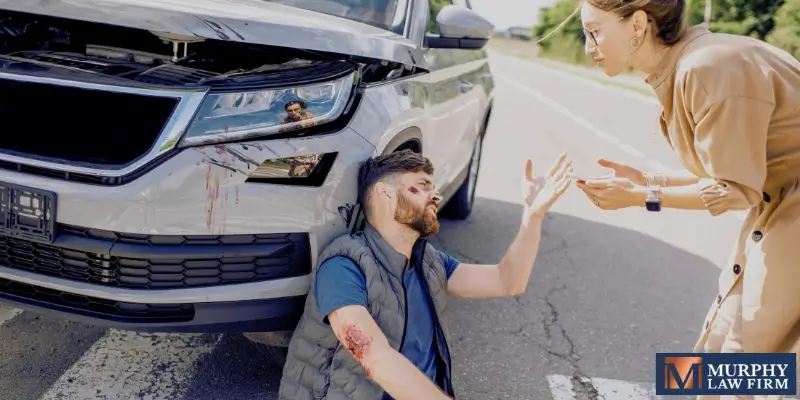
If you were in a car accident in Louisiana and you think you might be at fault, you need to understand your legal rights. Louisiana’s car accident laws changed on January 1, 2026, and those changes could affect whether you get any money at all.
Murphy Law Firm has been helping Louisiana car accident victims since 1993. Our personal injury attorneys know Louisiana law inside and out — including every change that took effect in 2026. Call us at (225) 928-8800 or visit our contact page to schedule a free consultation. There is no upfront cost and no fee unless we win your case.
Louisiana Changed Its Fault Rules in 2026
For many years, Louisiana followed what is called pure comparative fault. Under that system, you could get money even if you were mostly at fault for the accident. Your recovery was simply reduced by your percentage of fault.
That rule is gone.
Louisiana now follows a comparative fault rule with a 51% bar, as outlined in Louisiana Civil Code Article 2323. Here is how it works:
- If you are 50% or less at fault, you can recover compensation. Your award is reduced by your percentage of fault.
- If you are 51% or more at fault, you recover nothing.
This is the most important change to Louisiana car accident laws in decades. If an insurance company or jury finds you are mainly responsible for your accident, you walk away with zero — no matter how badly you were hurt.
What This Means in Real Life
Here are three simple examples of how the comparative fault system works today:
Example 1: Another driver runs a red light and hits you. They are found 100% at fault. You recover 100% of your damages. No change from before.
Example 2: You were slightly speeding when another driver pulled out in front of you. A jury finds you 25% at fault and the other driver 75% at fault. You recover 75% of your total damages.
Example 3: You were making a left turn when another driver hit you. A jury finds you 55% at fault. Under the new comparative fault rule — you recover nothing. Under the old pure comparative fault system, you would have recovered 45% of your damages. That recovery is now gone.
That third example is the big change. The 51% bar is final. There are no exceptions.
Insurance Companies Will Use This Change Against You
Insurance adjusters know the new law very well. And they will use it against you in insurance claims.
When you file an injury claim after a Louisiana car accident, the at-fault driver’s insurance company gets to work immediately. They review the police report. They examine witness statements. They look at traffic camera footage. They hire experts. All of this is done to build a case that you — not their driver — caused the accident.
Under the old pure comparative fault system, pushing your fault from 40% to 60% just reduced your recovery. Under the new rule, reaching 51% eliminates your recovery entirely. That gives insurance companies and insurance adjusters a powerful reason to fight fault harder than ever before.
Because crossing the 51% fault threshold can completely eliminate compensation, insurance companies now have a stronger incentive to shift blame onto injured drivers. Even a small change in fault allocation can dramatically affect the outcome of a claim under Louisiana’s current law.
This is exactly why you need a personal injury lawyer before you talk to any insurance company. The attorney-client relationship begins the moment you call Murphy Law Firm — and from that point forward, we handle all contact with insurance companies on your behalf.
What Determines Fault in a Louisiana Car Accident?
Fault in a Louisiana car accident is determined by looking at what each driver did wrong. Our car accident attorneys carefully investigate your accident and gather evidence to help eliminate or minimize any fault assigned to you and to build your strongest claim.
Many drivers assume that the police officer’s opinion at the scene automatically determines who was at fault for the accident. However, police reports are only one piece of evidence. While they can be influential, they are not the final word when it comes to determining liability in a personal injury claim or lawsuit.
Police officers often arrive after the collision has already occurred and must make quick decisions while addressing injuries, directing traffic, and documenting the scene. As a result, accident reports can sometimes contain mistakes, incomplete information, or conclusions that are later challenged by additional evidence. Key evidence includes:
Police report. The official accident report documents what law enforcement found at the scene. If the other driver got a ticket, that is strong evidence of fault. If the police report contains inaccuracies, other evidence may outweigh it. Witness testimony, surveillance footage, vehicle damage analysis, accident reconstruction, and additional investigative findings can all be used to challenge incorrect conclusions contained in an accident report.
Witness statements. People who witnessed the accident are often the most credible witnesses. We track down witnesses and get their accounts on record quickly.
Traffic camera and surveillance footage. Footage of the accident itself is powerful evidence. It disappears fast — we move immediately to preserve it.
Medical records and medical bills. Documenting your injuries and connecting them to the accident is critical. Gaps in medical treatment give insurance companies ammunition to argue that your injuries are not serious.
Accident reconstruction experts. In some cases, we hire experts who can recreate exactly how the accident happened using physical evidence and data.
Driver’s insurance and contact information. Getting all insurance coverage information at the scene is essential to protecting your injury claim later.
What If the Police Report Says You Were at Fault?
Being listed as the at-fault driver in a police report does not automatically prevent you from pursuing compensation. Insurance companies, attorneys, judges, and juries consider all available evidence when determining fault.
In some cases, additional evidence uncovered during the investigation may show that another driver shares responsibility for the crash or that the initial report does not accurately reflect what happened. This is why it is important to speak with an experienced Louisiana car accident attorney as soon as possible after an accident.
Our legal team can gather evidence, interview witnesses, review surveillance footage, consult accident reconstruction experts when necessary, and work to ensure fault is assigned fairly based on all available facts.
What Should You Do After a Louisiana Car Accident?
How you react after an accident can have a big impact on the outcome of your claim. After a car accident in Louisiana, it’s important to stay calm and take the right steps from the start. Here is what to do:
Stay at the scene. Louisiana law requires you to stop after any accident involving injury or property damage.
Call 911. A police report creates an official record. Always get law enforcement involved.
Get the other driver’s contact information and insurance information. You need their name, phone number, driver’s license number, license plate, and insurance coverage details.
Document everything. Take photos of both vehicles, property damage, road conditions, and any visible injuries.
Seek medical care immediately. Even if you feel fine, see a doctor within 24 to 48 hours. Some serious injuries — including concussions and internal damage — are not immediately obvious. Your medical bills and records start here.
Do not admit fault. Do not say “I’m sorry” or make any statement suggesting you caused the accident. Even a casual apology can be used against you in the fault determination.
Do not talk to the other driver’s insurance company. Their adjuster is not on your side. You should even be cautious when speaking with your own insurance company. Direct all calls to Murphy Law Firm.
Contact Murphy Law Firm. The sooner we are involved, the sooner we can gather evidence, protect your rights, and begin building your car accident case.
Whether fault is disputed, the police report contains errors, or an insurance company is attempting to place excessive blame on you, our attorneys know how to investigate accidents and build strong cases supported by evidence. We work to challenge inaccurate fault determinations and protect our clients’ rights throughout the claims process.
What Damages Can You Recover?
If you are found 50% or less at fault in your Louisiana car accident, you may be entitled to recover the following damages; however, your compensation will be reduced by your percentage of fault:
Economic damages — medical bills, future medical expenses, lost wages, loss of future earning capacity, and property damage to your vehicle.
Non-economic damages — pain and suffering, emotional distress, and loss of enjoyment of life.
Wrongful death damages — if a family member was killed in a motor vehicle accident caused by another driver’s negligence, surviving family members may pursue a wrongful death claim.
In car and truck accident cases involving drunk driving, punitive damages may also be available under Louisiana law.
Louisiana’s Statute of Limitations for Car Accident Claims
Under Louisiana Civil Code Article 3493.1, you have two years from the date of your car accident to file a personal injury lawsuit. Missing this deadline permanently eliminates your right to compensation — regardless of how strong your personal injury cases are.
Do not wait. Evidence disappears. Call Murphy Law Firm today.
Contact Murphy Law Firm
If you are in a car accident, you need to get in contact with experienced personal injury attorneys, regardless of fault. Contact Murphy Law Firm today.
We have recovered more than $250 million for Louisiana accident victims — including verdicts of $18.9 million and $13.4 million. Insurance companies know us. They know we prepare every car accident case for trial and follow through when they refuse to be fair.
Peyton Murphy is a member of the National Trial Lawyers Association, the Multi-Million Dollar Advocates Forum, the American Association for Justice, and the Louisiana Association for Justice. Our personal injury attorneys bring 33 years of Louisiana car accident law experience to every case we handle.
We handle all car accident cases on a contingency fee basis. No upfront costs. No fee unless we win.
Call (225) 928-8800 — available 24 hours a day, 7 days a week — or contact us online to schedule your free consultation. The at-fault party’s insurance company is already working against you. Let Murphy Law Firm go to work for you.
Murphy Law Firm | 2354 S. Acadian Thruway, Baton Rouge, Louisiana | Serving car accident victims throughout Louisiana.

Don't Settle
For Pennies!

Copyright © 2026 Murphy Law Firm. All Rights Reserved.
Digital Marketing By: 