

Louisiana Seat Belt Laws – All You Need To Know
News and Articles
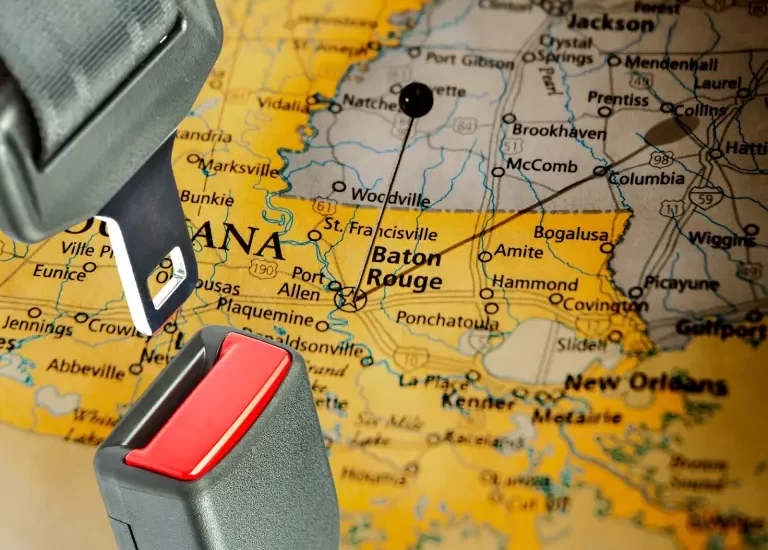
Louisiana teen driving laws follow a graduated driver licensing system with three stages. Teens first obtain a learner’s permit after completing a state-approved driver education course and passing a written exam, allowing supervised driving with a licensed adult.
After holding the permit for a required period, they can receive an intermediate license that permits unsupervised driving but includes nighttime curfews and passenger restrictions. Eventually, teens can graduate to an unrestricted license with a clean driving record.
Louisiana Seat Belt Laws
In this day and age, buckling up is second nature for most drivers and passengers. But it took a long time and numerous changes before seat belts were widely accepted. In other words, the seatbelt truly has evolved and come a long way since first being introduced by Volvo in 1959!
The first seat belt law in Louisiana went into effect in 1986, which required all passengers in automobiles to buckle up. However, the fact that this rule was passed as a “secondary enforcement law” meant that police could not pull someone over only for failing to wear a seat belt. It wasn’t until a decade later that this same law was switched to a “primary enforcement law” which gave law enforcement permission to pull over drivers strictly for not wearing a seat belt.
Every passenger in a vehicle must now comply with Louisiana’s current law, which mandates that all must wear a safety restraint, regardless of where they are seated. From a car accident lawyer at Murphy Law Firm, find out more about Louisiana’s seat belt safety and regulations.
Louisiana law formerly provided that failure to wear a seatbelt could not be admitted as evidence of comparative negligence or failure to mitigate damages. However, as of January 1, 2021, the Legislature repealed this provision. Now, the insurance company can tell the jury that a plaintiff was not wearing their seatbelt and juries can take such failure into account when assessing fault between the parties.”– a Baton Rouge Car Accident Attorney
Louisiana Seat Belt Information from a Baton Rouge Car Accident Attorney
The NHTSA’s most current statistics show that 87.5% of Louisiana drivers and passengers buckle up. Even though that’s a reasonable percentage, it still doesn’t beat the national average of 90.3%. Louisianans are known for having a good time and living life to the fullest. But the lower percentage means they are at a higher risk of major injury due to a car or truck accident.
Furthermore, there are a few roadways and high-risk places in the Baton Rouge region that we want drivers to be aware of:
- Burbank Drive from Lee Drive to Bluebonnet
- Nicholson Drive
- Staring Lane from Highland Road to Perkins Road
- O’Neal Lane from Harrell’s Ferry Road & I-12
- Highland Road from Perkins Road to Airline Highway

Please note that 51% of passengers in Louisiana were killed in incidents in 2019 while not wearing seat belts, so you should always wear a seat belt when driving in addition to using extra caution on these roads.
Seat Belts and Auto Accidents in Louisiana
Sadly, failure to use seat belts and defective manufactured seat belts are a leading cause of fatalities in car accidents and truck accidents across Louisiana. Often, the failure to use a seat belt is often the difference between surviving a dangerous car accident and losing your life to one – especially in larger auto accidents involving heavy motor vehicles such as semi-trucks, 18 wheelers, and buses.
Sometimes it is difficult to discern who is at fault in auto accidents, but when it comes to failed seat belts, there are some seat belt defects we want you to look out for:
- False Latching
- Latching the metal plate into the buckle typically locks the passenger in the seat, securely. Unfortunately, the latching system is sometimes defective which means the seatbelt can become loose at any sudden movement – especially in a severe car crash.
- Retractor Failure
- The retractor is the gear inside the seatbelt that “feeds” the belt out, and it is designed to lock during an accident. Sometimes, these retractors are built with defects and do not lock upon impact – causing potential injuries and fatalities.
- Weak seat belt Webbing
- The “webbing” is the polyester strap that goes across the individual. This material is known to be incredibly secure, but there have been instances where the webbing breaks and tears upon impact – if the webbing of your seatbelt breaks during a car accident, it could be because of defective design or manufacturing.
- Defective Design
- “Defective Design” refers to all of the above malfunctions, in addition to any other defects not explicitly mentioned. In this context, these defects can refer to any mechanism in the seat belt or defects in the full-system of the vehicles.
Differences Between Adult and Child Seat Belt Laws
Louisiana has seat belt legislation that includes both the general use of seat belts and child restraint devices. These laws are listed in Louisiana Revised Statutes Title 32, 295. Let’s buckle up and unravel the differences.
Louisiana Adult Seat Belt Laws
- Drivers are obliged by law to wear a seat belt at all times when the vehicle is moving in any passenger car, van, sports utility vehicle, or truck that weighs less than 26,000 pounds and was produced after January 1, 1981.
- The number of passengers a driver may carry must be less than or equal to the number of seat belts that are present in the vehicle.
- Any person riding in a passenger vehicle, van, SUV, or truck that weighs less than 26,000 pounds is required to use a seatbelt.
Child Seat Belt Laws
- As much as children under the age of two like to move and groove, until they reach the height and weight restrictions stated by the car seat’s manufacturer, they must be secured in a rear-facing car seat that complies with federal regulations.
- Once a child is over the age of two, and reaches the height and weight restrictions for rear-facing car seats, they must be fastened in a forward-facing car seat with an internal harness until they reach the restrictions for that position.
- Children who have outgrown forward-facing car seats and are at least four years old must be restrained in a child booster seat using a lap and shoulder seat belt.
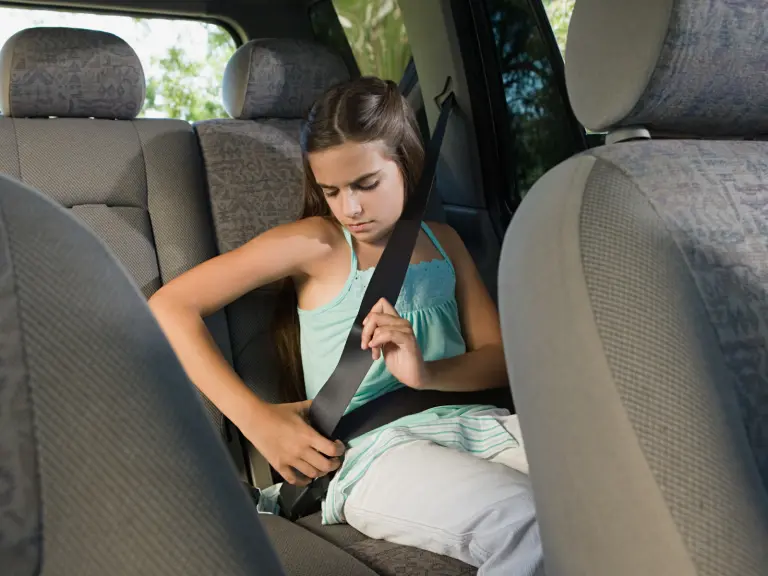
- Children who are at least nine years old and no longer fit in a kid booster seat must be adequately fitted with a regular seat belt that is securely wrapped around their bodies.
- The rear seat of a vehicle must always be used to transport children under the age of thirteen.
Seat Belts, School Buses, and Large Vehicle Safety
In 2021, Louisiana lawmakers considered HB 130, legislation that would have required newly manufactured school buses to be equipped with seat belts. The proposal ultimately did not become law. The debate highlighted ongoing concerns regarding passenger safety in school buses and other large vehicles.
Whether traveling in a passenger vehicle, bus, or commercial truck, proper safety restraints remain one of the most effective ways to reduce the risk of serious injury during a crash.
What Happens if You Don’t Buckle up in Your Car?
We’ve all seen the “Click It or Ticket” signs while driving around Louisiana, but what happens if you’re caught? As little as this may seem at first, violating Louisiana seat belt laws can actually be considered either a primary or secondary offense. For instance:
- A major offense is failing to restrain a kid in a child restraint device of any kind. For your first offense, you face a $100 fine; for your second, between $250 and $500; and for your third, $500 plus court fees.
- Use of a child restraint system that is not the right size or type is a secondary offense. If you are stopped for a traffic infraction, you may receive a fine of up to $100, expenses included, plus court costs.
- If you or a passenger is caught driving without a seat belt, you may be subject to fines of $50 for the first violation, $75 for the second offense, and $75 plus court costs for all future crimes. There will be a $20 surcharge added for each violation if the crime took place in Orleans Parish.
FYI: If you frequently travel to other states for work or pleasure, be sure to familiarize yourself with the seat belt regulations there as well!
Seat Belt Practices to Keep in Mind
As you can more than likely see by now, wearing a seat belt is vital to not only protecting yourself, but your passengers and other drivers as well. Here are a few quick and simple actions you can take to ensure your safety:
- Make sure that every seat belt in your car is in good functioning order by inspecting it
- Before you turn on your car, buckle up!
- Check to see that your passengers are wearing seat belts as well
- Say, “Au revoir” to passengers who refuse to wear a seat belt
- Double check that your child’s car seat doesn’t have any damage.
- According to the manufacturer’s recommendations, make sure your youngster is still fit for a safety or booster seat
If you or a loved one suffered injuries in a Louisiana car accident and believe a defective seat belt may have contributed to those injuries, it is important to preserve the vehicle and safety equipment whenever possible. Evidence related to seat belt performance can play a critical role in determining liability and protecting your legal rights.
A Car Accident Lawyer from Murphy Law Firm Can Help
Unfortunately, even when wearing a seat belt in accordance with Louisiana’s seat belt requirements, some people get hurt through no fault of their own. Which is why our trustworthy team at Murphy Law Firm is on standby and ready to help! We will take the time to listen to your case and our experienced attorneys will do whatever it takes to help you gain the compensation you deserve! Feel free to contact us by phone or by completing our short online form right away!
In some cases, injuries are not caused solely by the collision itself but by the failure of a defective seat belt. When a seat belt does not function as intended during a crash, injured victims may have grounds to pursue a product liability claim against the manufacturer, distributor, or other responsible parties.
Our legal team can investigate whether defective safety equipment contributed to your injuries and determine whether additional claims may be available beyond a traditional car accident or truck accident lawsuit.


Don't Settle
For Pennies!

Copyright © 2026 Murphy Law Firm. All Rights Reserved.
Digital Marketing By: 